Behind the IP: From College Insights to Regional Impact — Fea Bambina T. Marquez Wins ASEAN Y-Impact Creator Competition
In today’s digital economy, ideas, creative content, and storytelling are valuable forms of intellectual property (IP). From social media campaigns to creative works that shape public conversations, creators generate original expressions that carry both cultural and economic value. Intellectual property systems play an important role in recognizing, protecting, and empowering these creators, ensuring that their ideas receive proper attribution while enabling them to continue innovating and contributing to society.
Across Southeast Asia, initiatives that support youth creators increasingly highlight the importance of linking creativity with intellectual property awareness. By protecting original works and encouraging responsible sharing of ideas, IP frameworks help sustain an environment where innovation, advocacy, and creative expression can thrive.
One example of this growing intersection between creativity and impact can be seen in the work of Fea Bambina T. Marquez, a student of Advertising Management at the Ramon V. del Rosario College of Business, De La Salle University.
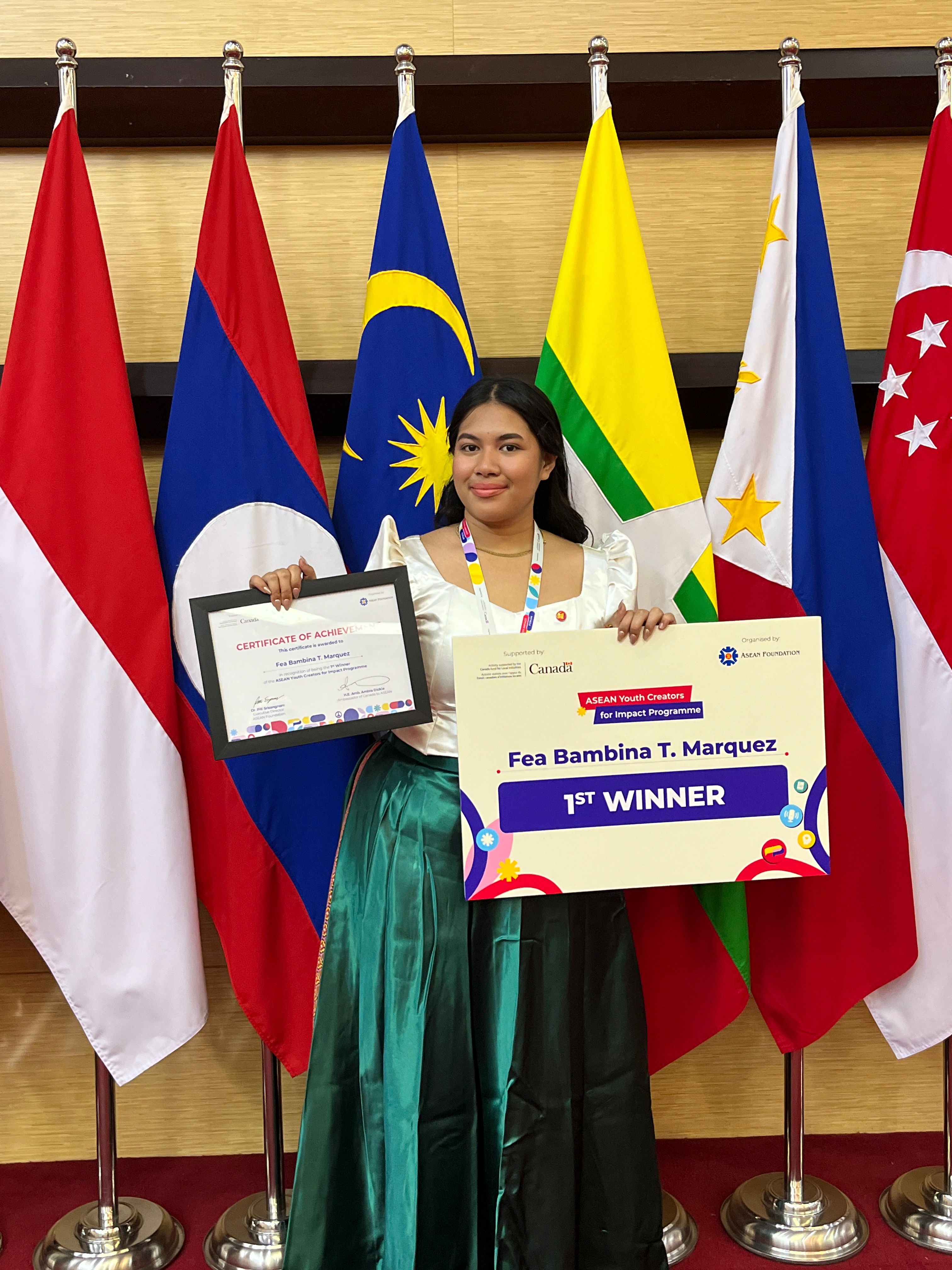
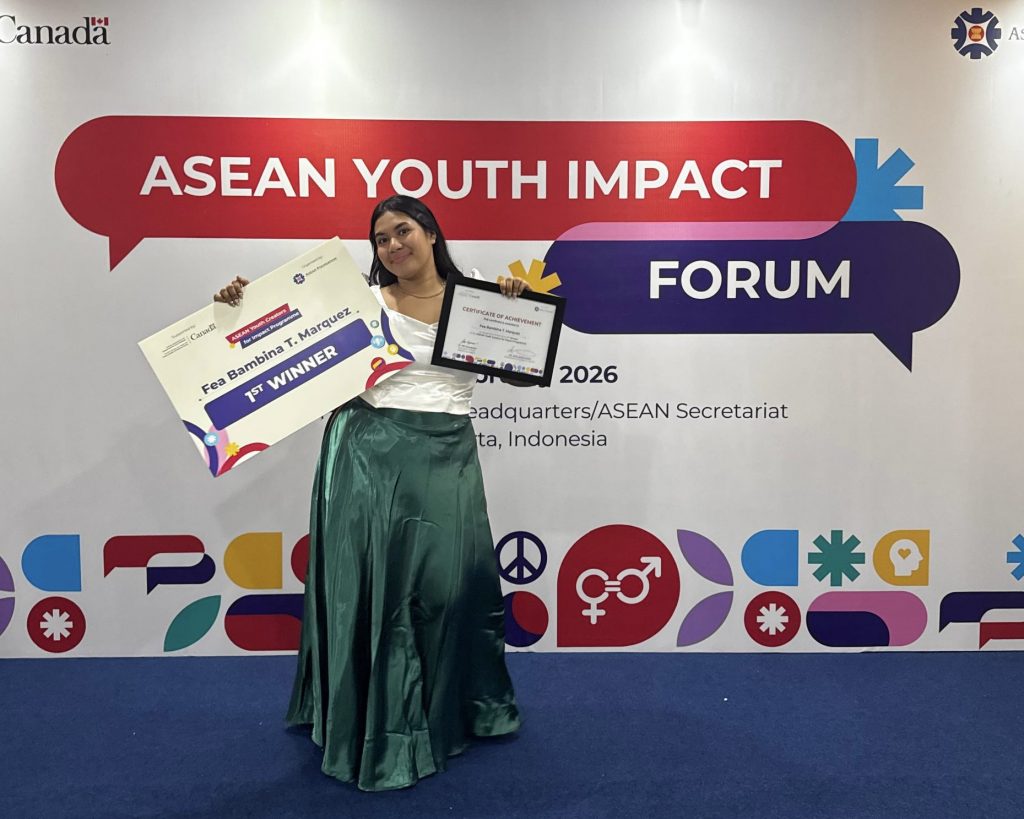
Fea was recently named the 1st Place Winner of the ASEAN Youth Creators for Impact (ASEAN Y-Impact) Programme organized by the ASEAN Foundation. The award was conferred at the ASEAN Secretariat in Jakarta, Indonesia.
Selected from over 300 applicants across Southeast Asia, Fea was first chosen as one of 11 official youth creators representing the region, with one delegate from each ASEAN Member State. Representing the Philippines, she later emerged as the Top 1 creator among the ASEAN delegates, recognized for delivering the most impactful and socially responsive campaign in the region.
Her winning two-month social media campaign, conducted from December 2025 to January 2026, focused on mental health and social equality under the central message:
“Rest is Not a Failure; It is a Necessity.”
The campaign challenged prevailing narratives around productivity and reframed rest as an empowering and necessary part of well-being, addressing the cultural guilt many young Filipinos experience when taking breaks from constant work and achievement.
Drawing from culturally grounded insights such as sipag at tiyaga, hiya, and the normalization of suffering, Fea designed content that validated exhaustion, encouraged guilt-free rest, and promoted sustainable mental wellness habits. Her campaign blended research-based messaging with engaging digital formats including interactive stories, memes, and micro-rest challenges, reaching audiences across Southeast Asia.
As part of the program, Fea attended the ASEAN Youth Impact Forum held from 11–14 February 2026 at the ASEAN Secretariat, where she participated in a Fireside Chat alongside the top three creators. Her campaign was recognized for its creativity, cultural depth, and measurable regional impact.
Fea’s achievement also resonates with the broader themes highlighted in DITECH 2026, which emphasizes Sports, Health, and Wellness as drivers of innovation and social progress. Her advocacy for mental wellness reinforces the importance of caring for both physical and mental health, aligning with the event’s emphasis on holistic well-being and youth-led initiatives that contribute to healthier communities.
Beyond advocacy, Fea’s work also reflects the growing importance of intellectual property in Southeast Asia’s digital and creative economies. As creators increasingly use digital platforms to share ideas, campaigns, and creative content across borders, intellectual property systems help ensure that these works are properly recognized and that creators can continue developing their ideas responsibly.
Fea’s success demonstrates how youth-led creativity, supported by strong intellectual property awareness and ecosystems, can inspire conversations, shift cultural perspectives, and contribute to building a more inclusive, resilient, and mentally healthy ASEAN community.

You may also like
WIPO and ASEAN TISC Delegates Visit DLSU