

EXPANDING LIVELIHOOD OPPORTUNITIES ACROSS DLSU STAKEHOLDERS
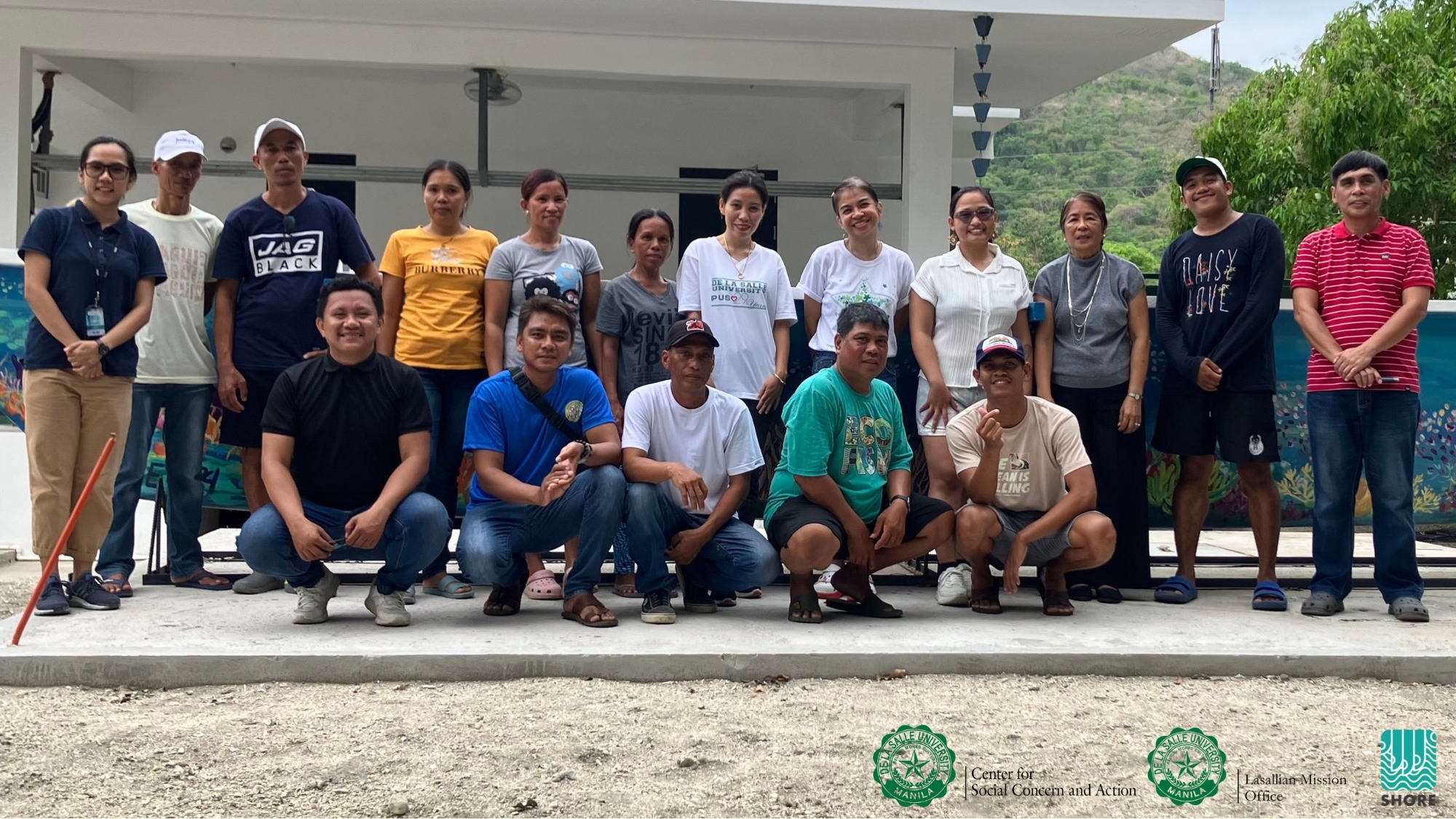 Image source: Center for Social Concern and Action
SDG 8 (DECENT WORK AND ECONOMIC GROWTH) REPORT
Academic Year 2023-2024
The De La Salle University (DLSU) commitment to sustainable economic mobility of all stakeholders is rooted in the vision-mission of the University to serve “society, especially the poor and marginalized.” This involves benefits for employees and increasing work opportunities for both students and staff. In order to foster economic growth, the University prioritizes the fair treatment and holistic development of employees and students alongside stakeholders in need. Thus, DLSU policies contribute to the United Nations Sustainable Development Goal (SDG) 8, Decent Work and Economic Growth.
The institutional commitment to the highest standards of employment practices and labor rights are cataloged and operationalized through the faculty and administrative employee manuals of the University, as well as the DLSU Code of Ethical Conduct. Employees are paid a living wage following local government-mandated minimum daily wage and family living wage rates, and working conditions strictly uphold Philippine laws against forced labor and involuntary servitude. Furthermore, the employee manuals enumerate the procedures through which employees exercise their rights to: participate in the determination of benefits, privileges and just salaries; organize themselves; and seek redress of grievance and due process appeals.
Additionally, the DLSU Safe Spaces Policy and Program formalizes the institutional adherence to the Philippines Safe Spaces Act of 2019. The policy protects the value and dignity of every human person and guarantees full respect for human rights. In relation to ethical employment practices, this official document concretizes the University recognizing unions for all (p. 8) as well as the University procedures and programs to end all forms of discrimination in the workplace and wherever the University operates (p. 5). The program especially emphasizes protecting women and LGBTQIA+ stakeholders from gender-based discrimination and sexual harassment. The University Code of Ethical Conduct and the DLSU Mental Health Policy also contribute to preserving the integrity of all stakeholders, including employees.
Dedicated units under the Office of the Vice President for Lasallian Mission (OVPLM) take point on equipping undergraduate students and other stakeholders with varied capacity-building and formation in the field. The Center for Social Concern and Action (COSCA) facilitates the university-wide Service-Learning Program that bridges grassroots experience to curricular programs. Likewise, the DLSU NSTP and Formation Office (NFO) is in charge of the university implementation of the National Service Training Program. NFO oversaw 108 different projects for 7,935 beneficiaries over the course of the academic year 2023-2024, including 80 civic welfare training projects. Other highlights include June 2024, when COSCA collaborated with the DLSU Br. Alfred Shields FSC Ocean Research (SHORE) Center, the then Br. Alfred FSC Marine Station, on mangrove planting and training sessions for several community partners. Held in Lian, Batangas to benefit grassroots communities in the province, the program was led by marine biology experts Dr. Emilia T. Quintino for crab-fattening training and Ms. Russel Christine Corcino for environmental conservation. Earlier in April 2024, COSCA also notably went to Malaysia with De La Salle Philippines (DLSP), in partnership with Malaysian non-profit Cahaya Surya Bakti (CSB). Together, they conducted a Training Needs Analysis series in Malaysia for CSB professors on the educational needs of their refugee students.
Through these and many more activities, DLSU fosters safe and equitable spaces for employees, students and other stakeholders for capacity-building experiences even beyond the classroom.
—
Written by Davi Garcia
Edited by Gabrielle Ongkiko
Back to University Sustainability Office homepage
