

INNOVATING IMPACT
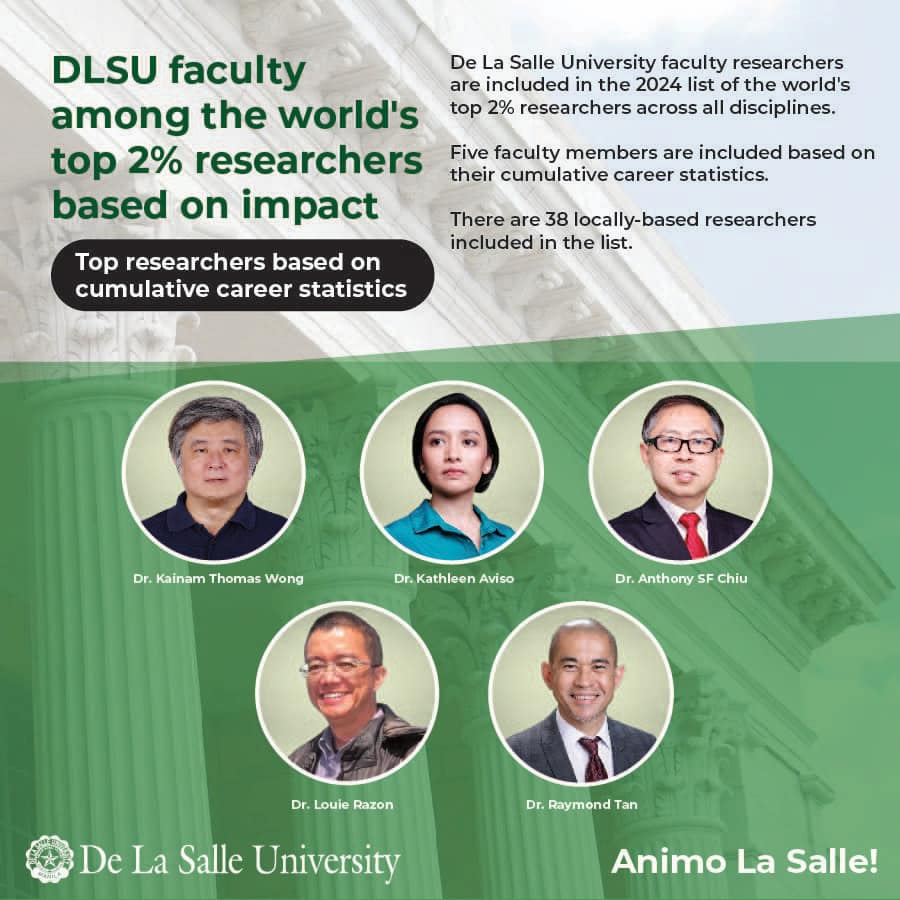
Image source: Archers Network
SDG 9 (INDUSTRY, INNOVATION, AND INFRASTRUCTURE) REPORT
Academic Year 2023-2024
De La Salle University (DLSU) primarily works towards achieving SDG 9 (Industry, Innovation, and Infrastructure) through innovative research across various fields. Research funding is distributed across the 18 DLSU research centers across science, technology, engineering, and mathematics (STEM); medicine; and the arts, humanities, and social sciences. Additionally, three spinoff startups were established from research that developed intellectual property through Animo Labs and the DLSU Innovation and Technology Office (DITO). 24 more startups were established through the Lasallian Social Enterprise for Economic Development (LSEED) Center that year. These various research and development activities continuously demonstrate the whole-of-university commitment to sustainable solutions.
According to Stanford University statistician John Ioannidis and colleagues, nine DLSU faculty were among the world’s top 2% of researchers in 2024 based on research impact, including five esteemed faculty with the highest cumulative career statistics. Moreover, staff and students alike collaborate with the research centers to transform theoretical findings into grassroots action. Our infrastructure roadmap is designed to extend beyond campus borders, fostering convergence with external partners like Integrated Micro-Electronics, Inc. (IMI).
Physical facilities are not just assets, but platforms for social transformation. The premier Animal Biosafety Level 3 (ABSL3) Research Facility of the Philippines in DLSU Laguna Campus is a vital collaboration with the Department of Science and Technology – Philippine Council for Agriculture, Aquatic, and Natural Resources Research and Development (DOST-PCAARD), De La Salle Araneta University (DLSAU), and the Research Institute for Tropical Medicine (RITM). Among the research pods there is one dedicated to African Swine Flu vaccine development.
The journey toward the targets of SDG 9 is one of institutional transformation that is rooted in the individual excellence and stewardship of Lasallian academics. These great innovations of AY 2023-2024 were thanks to a larger faculty population (full time equivalent): 340 academic staff in STEM, 91 in medicine, and 524 in the humanities.
—
Edited by Gabrielle Ongkiko
