COMMUNION IN MISSION, IN ACTION
Source: University Sustainability Office
SDG 17 (PARTNERSHIPS FOR THE GOALS) REPORT
Academic Year 2023-2024
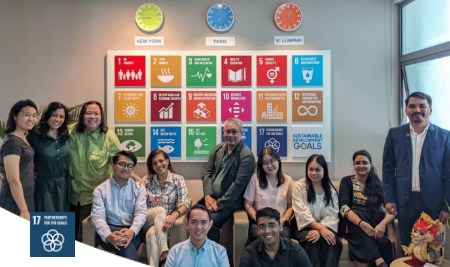
While De La Salle University (DLSU) works to achieve all the United Nations Sustainable Development Goals (UN SDGs), SDG 17 (Partnerships for the Goals) is an inherent priority because of the Lasallian value of Communion in Mission. This makes SDG 17 the keystone of the DLSU whole-of-university approach to sustainability.
In terms of direct involvement in SDG policy development, AY 2023-2024 was the beginning of the 3-year term as the national secretariat of the United Nations Sustainable Development Solutions Network (SDSN) Philippines, the global network initiated by the United Nations to localize the SDGs. The University also continues to contribute international data gathering as a science partner of the Sustainable Consumption and Production Hotspot Analysis Tool (SCP-HAT) project by the Life Cycle Initiative of UN Environment. On the national level, DLSU is a research partner of the Second Congressional Commission on Education (EDCOM 2), informing national policy on critical issues of basic, higher, and teacher education.
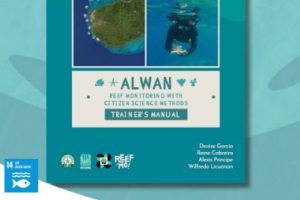
Bridging global and local collaboration for over a decade, the Br. Alfred Shields FSC Ocean Research (SHORE) Center has led a complex coalition of international non-government organizations, national agencies and grassroots coastal communities in Batangas province to safeguard the Tubbataha Reef. Their multi-stakeholder collaboration improves global best practices for citizen science and coastal management to protect this United Nations Educational, Scientific and Cultural Organization (UNESCO) World Heritage Site.
Simultaneously, the University initiates and participates in cross-sectoral conferences about the SDGs with external partners, including the World Wide Fund for Nature (WWF), the Association for the Advancement of Sustainability in Higher Education (AASHE), Philippine Business for Social Progress (PBSP), and the Department of Science and Technology – National Capital Region (DOST-NCR).
The DLSU sustainability policy guides how sustainability is integrated into the curriculum as service-learning. A prime example of this is the Clinical Legal Education Program (CLEP) of the Tañada-Diokno School of Law (TDSOL), through which law students are equipped with practical training in human rights advocacy. Additionally, the University significantly expanded academic offerings to embed the UN SDGs into more dedicated academic courses to bolster student sustainability literacy: the Gokongwei College of Engineering (GCOE) has 66 courses across four departments; the College of Liberal Arts (CLA) offers 104 courses across seven departments; and the Br. Andrew Gonzalez College of Education (BAGCED) contributes two specialized courses.
The DLSU SDG City Project represents Communion in Mission at the hyper-local level. In partnership with beneficiaries beginning with the City of Manila, the University Sustainability Office (USO), the Center for Social Concern and Action (COSCA), and the Jesse M. Robredo Institute for Governance (JRIG) research center bridge good governance, civic engagement, and academic research for sustainable cities. Additionally, the NSTP and Formation Office (NFO) has mobilized 756 beneficiaries through eight programs in AY 2023-2024 alone. The University also partners with public schools such as the Pamantasan ng Lungsod ng Maynila (PLM) to provide environmental and sustainability learning.
Fostering inclusivity, sustainability, and civic engagement, the University continues to transform learning into meaningful action, guided by the Lasallian values of faith, service, and communion. The rest of the DLSU Sustainability Report AY 2023-2024 may be accessed here.
—
Edited by Gabrielle Ongkiko

You may also like
A FIRE THAT KEEPS ON BURNING
FOR A FLOURISHING DLSU