COMMUNITIES FOR THE FUTURE
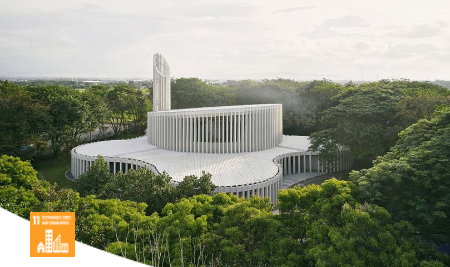
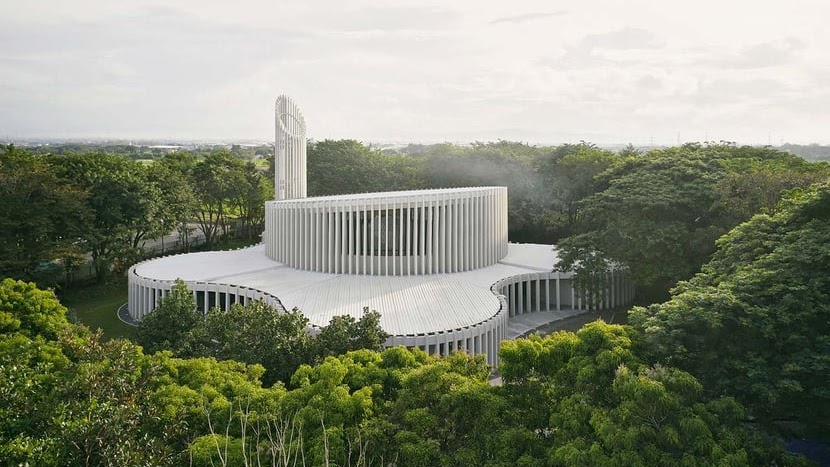
Image source: Santuario De La Salle
SDG 11 (SUSTAINABLE CITIES AND COMMUNITIES) REPORT
Academic Year 2023-2024
Founded in the center of the Philippine capital, De La Salle University (DLSU) has long understood that purpose goes beyond scholastic success. This dedication has been reinforced over the past year through significant collaborations, research, and student-led developments for more resilient and caring communities.
Acknowledging the century-long history of the University is inextricable from the cities of Manila and Biñan (Laguna), home of the largest DLSU campuses, the respective Facilities Management Offices (FMOs) of each campus maintain free and public access to all buildings following visitor registration and security checks. This includes The Museum at the Manila campus, though exhibitions may occasionally have entrance fees depending on the event. A notable exception to this is the Santuario De La Salle in the DLSU Laguna Campus, a 2,065 square meter nature sanctuary and Catholic church that keeps daily open hours. The FMOs also maintain pedestrian prioritization measures on all campuses. Further building for the long-term, the University continues to transition all facilities to green building standards, like the Henry Sy Sr. Hall that is BERDE-certified by the Philippine Green Building Council (PHILGBC).
In terms of performance art, the University Cultural and Arts Office (CAO) facilitated 37 performances over the course of academic year 2023-2024. Student-led performing arts organizations showcased Filipino culture and history in musicals as well as orchestral, choral, dance, and film festivals, to name a few. The DLSU Harlequin Theatre Guild in particular staged a contemporary musical update to multi-awarded playwright Isagani Cruz’s Halimaw, and a five-play series entitled Paroo’t Parito, developed with the DLSU Department of Literature and themed ‘Women and Children of Nueva Vizcaya.’Meanwhile, DLSU researchers have developed innovative studies and technologies to preserve cultural heritage. The Hanunoo Mangyan Language Documentation Project of the Br. Andrew Gonzalez FSC College of Education (BAGCED) is an ongoing endeavor to develop a linguistic glossary software for the increasingly displaced Mangyan people of the Oriental Mindoro region. The research is also notably funded by the Department of Science and Technology – National Research Council of the Philippines (DOST-NRCP). The DLSU Center for Human-Computing Innovations (CeHCI) also began a similar project called Patunhay, a software to generate motion captured, animated 3D models of Philippine folk dances for digital archiving.
—
Edited by Gabrielle Ongkiko

You may also like